
If your lawn has developed bare patches or looks thin after summer, October can seem like your last chance to repair it before winter.
The good news is that you can still sow grass seed in October in some parts of the UK. However, the calendar alone should not decide whether you go ahead. Soil temperature, moisture, frost risk and your local weather all matter.
The Royal Horticultural Society (RHS) advises that October can still be suitable for sowing grass seed in warmer parts of the UK, while cooler areas may already be getting too late for reliable establishment. Soil temperatures of around 7°C or above are a useful guide for good germination.
So, the short answer is: yes, but timing and conditions are important.
Is October Too Late to Sow Grass Seed?
Not necessarily.
Early autumn is generally an excellent period for lawn work because the soil is still relatively warm while rainfall becomes more dependable. The RHS identifies spring and autumn as good periods for establishing a lawn from seed, with early autumn particularly favourable.
However, October is different from September.
As the month progresses:
- Soil temperatures gradually fall.
- Daylight hours become shorter.
- Grass growth slows.
- Frost becomes more likely.
- Heavy rain can make the ground difficult to work.
- Newly germinated grass has less time to establish before winter.
This means early October is generally more forgiving than late October.
If conditions are already cold, wet or frosty, forcing the job may simply waste your seed. Waiting for a suitable growing period in spring can be a more practical option.
How to Tell If Your Lawn Is Still Suitable for October Seeding
Before scattering grass seed, check the conditions in your garden.
1. Check the Soil Temperature
Soil temperature is more useful than simply looking at the air temperature.
The RHS recommends a soil temperature of around 7°C or above as a useful guide for October grass-seed sowing.
A basic soil thermometer can help if you’re unsure.
Don’t assume that because an afternoon feels mild, the soil is necessarily warm enough.
2. Check Whether the Soil Is Moist
Grass seed needs moisture to germinate, but waterlogged soil can cause problems.
Avoid sowing when the ground is:
- Completely saturated
- Covered in standing water
- Extremely muddy
- Difficult to work without leaving deep footprints
Moist soil is useful. Waterlogged soil is not.
3. Check the Frost Forecast
Young grass needs time to establish.
If a significant period of frost is expected immediately after sowing, germination and early growth may be slower.
Check the local weather forecast before preparing the lawn.
4. Look at Your Existing Grass
If the grass in your garden is still actively growing, conditions may still be suitable for new seed.
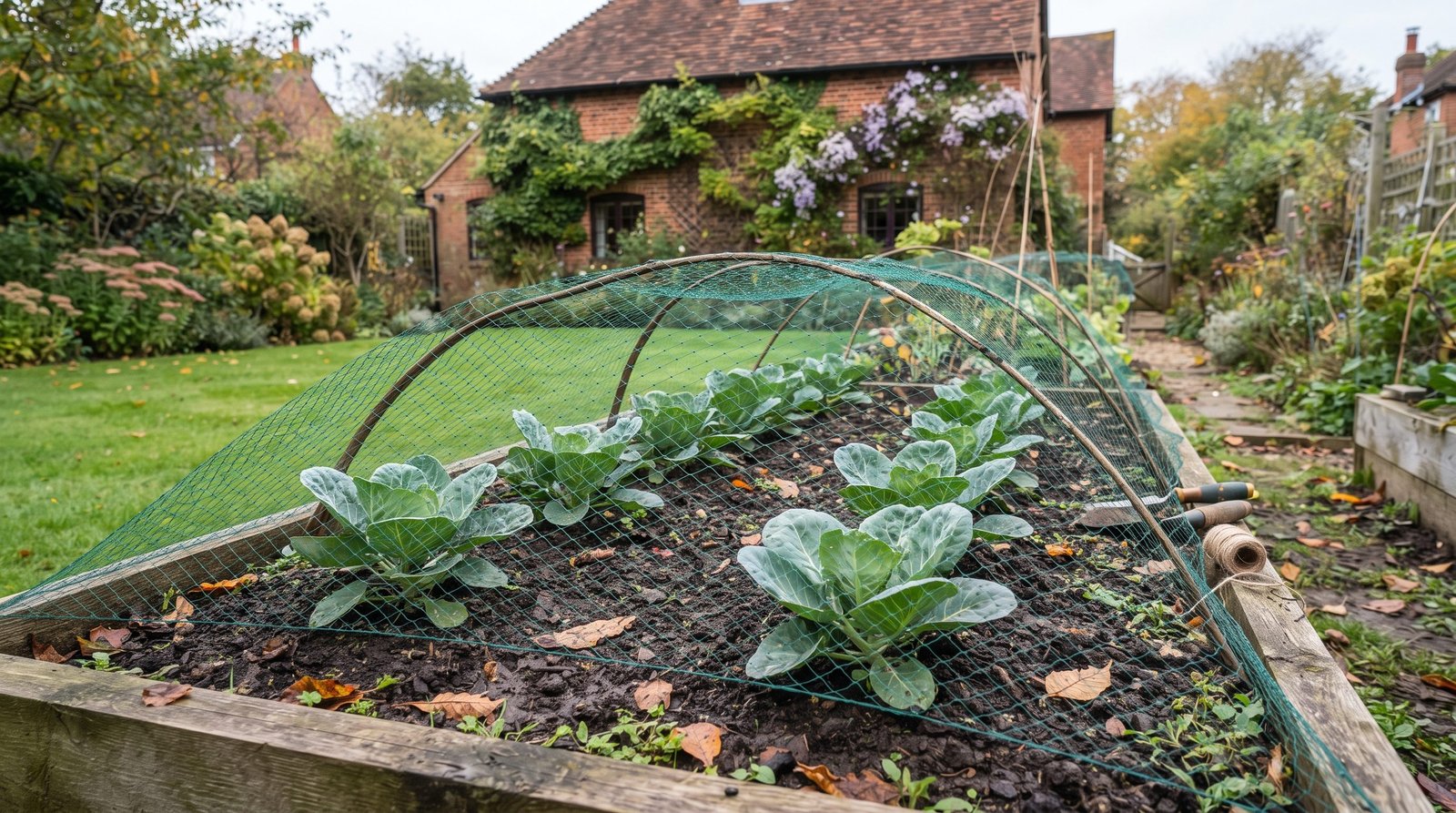
The RHS also notes that weed germination can provide an indication that soil temperatures are still suitable for grass seed.
5. Consider Where You Live in the UK
October conditions vary considerably across the UK.
A mild garden in southern England may still have suitable conditions while a colder inland or northern location may already be approaching winter conditions.
For this reason, there isn’t one October date that works equally well across the whole country.
Why Autumn Can Be a Good Time to Sow Grass Seed
Grass seed needs suitable warmth and moisture to germinate.
Autumn can provide a useful combination of both.
The soil has retained some warmth from summer, while cooler temperatures reduce the stress associated with hot and dry conditions. Autumn rainfall can also reduce the need for frequent watering.
However, conditions become less favourable as temperatures continue to fall.
This is why early autumn is generally more reliable than late autumn for establishing new grass.
How to Sow Grass Seed in October
If conditions are suitable, preparation is just as important as choosing the right date.
Step 1: Identify the Area You Want to Repair
Look for areas that are:
- Completely bare
- Thin
- Damaged after summer
- Worn by regular foot traffic
- Showing signs of dead or weak grass
If most of the lawn is healthy but simply looks thin, you may want to consider overseeding rather than starting again.
Step 2: Remove Leaves and Debris
Clear fallen leaves, dead grass and other debris from the area.
This is particularly important in October because leaves can quickly accumulate on lawns.
A thick layer of leaves can block light and restrict airflow around the grass.
Step 3: Loosen the Soil
For a small bare patch, use a hand fork or garden rake to loosen the surface.
You don’t need to dig deeply.
The goal is to create a reasonably fine and open surface where the seed can make good contact with the soil.
Step 4: Level the Area
Remove stones, dead vegetation and large pieces of debris.
If the patch has sunk below the surrounding lawn, add a suitable lawn soil or topsoil and level it.
Avoid creating a very thick layer of loose material that could easily wash away during heavy autumn rain.
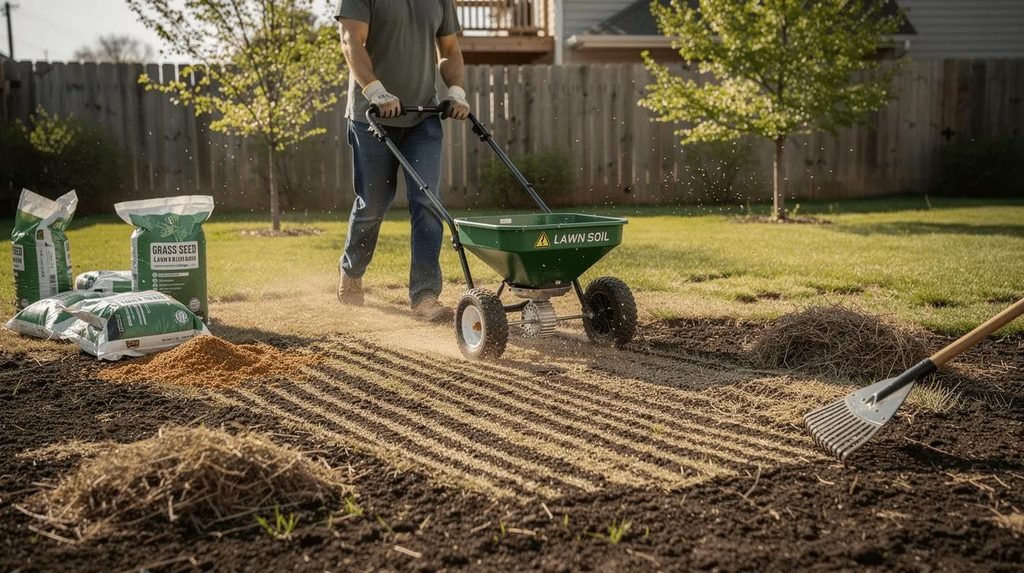
Step 5: Spread the Grass Seed
Apply the seed according to the instructions on the seed packet.
For a small patch, you can spread the seed by hand.
For larger areas, a lawn spreader can help distribute the seed more evenly.
Try to avoid putting too much seed in one area while leaving other sections almost bare.
Step 6: Lightly Rake the Seed
Grass seed needs good contact with the soil.
Lightly rake the area after spreading the seed so that some of the seed settles into the surface.
Don’t bury the seed deeply.
A common mistake is pushing grass seed several centimetres into the ground. Grass seed generally performs better when it remains relatively close to the surface.
Step 7: Keep the Seedbed Moist
October often provides more natural rainfall than summer, but don’t assume rain will always be sufficient.
If the surface becomes dry, water gently.
The aim is to keep the seedbed moist without creating standing water.
What If Heavy Rain Is Forecast?
Heavy rain is one of the reasons October sowing can sometimes be difficult.
Light rain can be helpful because it supplies moisture.
Heavy rainfall immediately after sowing, however, can potentially:
- Wash seed away
- Create puddles
- Move seed into piles
- Disturb the prepared soil
If exceptionally heavy rain is forecast, waiting for a more suitable weather window may be sensible.
The ideal condition is moist soil rather than saturated soil.
What Happens If You Sow Grass Seed Too Late in October?
Grass seed doesn’t automatically fail because the calendar reaches late October.
However, colder conditions can slow germination and establishment.
The bigger issue is that newly germinated grass has less time to develop before winter.
This is particularly important in colder parts of the UK.
If you’re already experiencing:
- Consistently cold soil
- Regular frost
- Very slow grass growth
- Waterlogged ground
- Increasingly cold nights
then waiting until spring may be more practical.
Should You Wait Until Spring?
Sometimes, yes.
If conditions are already deteriorating and your lawn needs major renovation, there may be little benefit in rushing the job simply because it is October.
Spring is another suitable period for establishing grass from seed.
However, spring has its own challenges.
These can include:
- Drying soil
- Increasing temperatures
- Greater watering requirements
- More active weed growth
So spring isn’t automatically easier.
The best time depends on the actual conditions in your garden.
October Grass Seed vs Waiting Until Spring
| Consideration | Sow in October | Wait Until Spring |
|---|---|---|
| Soil temperature | Usually falling | Increasing |
| Natural rainfall | Often helpful | Can vary |
| Weed competition | Generally lower | Often higher |
| Watering requirement | Often lower | Can increase |
| Frost risk | Increasing | Decreases as spring progresses |
| Time to establish | Limited before winter | Longer growing period |
| Best suited to | Mild, suitable conditions | Cold or unsuitable October conditions |
Neither option is automatically right for every garden.
Your local weather, soil and lawn condition should determine the decision.
Other Lawn Jobs You Can Do in October
October isn’t only about sowing grass seed.
It can also be a useful month for general lawn maintenance.
Repair Bare Patches
Small damaged areas can often be repaired if soil and weather conditions remain suitable.
Overseed a Thin Lawn
If your lawn still has plenty of grass but looks thin, overseeding can help introduce new grass into existing turf.
Aerate the Lawn
Compacted soil can restrict air, water and root development.
Aerating can be useful where the lawn receives regular foot traffic or has become compacted.
Deal With Moss and Thatch
If moss or excessive thatch has accumulated, appropriate autumn lawn maintenance can help improve the condition of the turf.
Don’t automatically scarify simply because it is October. First consider whether the lawn actually needs it.
Remove Fallen Leaves
Regularly remove leaves from the lawn.
Leaving a thick layer of leaves over the grass for long periods can reduce light reaching the turf.
How Long Does Grass Seed Take to Germinate?
Under favourable conditions, grass seed can begin germinating relatively quickly.
The RHS indicates that germination can take around seven to ten days when conditions are suitable.
However, germination is only the beginning.
The young grass still needs to:
- Develop roots.
- Produce new leaves.
- Become established.
- Thicken.
- Survive changing autumn conditions.
This is why you shouldn’t expect an October-seeded patch to become a fully established lawn within a couple of weeks.
Common Mistakes When Sowing Grass Seed in October
Sowing Simply Because It Is October
The date alone doesn’t guarantee suitable conditions.
Always consider soil temperature, moisture and the weather forecast.
Sowing on Compacted Soil
Seed placed on hard, compacted soil may struggle to establish.
Loosen the surface before sowing.
Burying Grass Seed Too Deeply
Grass seed generally needs good contact with the soil rather than being planted deeply.
Overwatering
More water doesn’t necessarily mean faster growth.
Keep the seedbed moist but avoid creating saturated conditions.
Ignoring the Weather Forecast
A suitable weather window is more important than choosing a specific date weeks in advance.
Walking on Newly Seeded Areas
Repeated foot traffic can disturb the seed and compact the soil.
Keep people and pets away from the newly seeded area as much as practical.
Assuming Every October Is the Same
UK weather varies from year to year and from region to region.
A warm October can provide very different conditions from a cold and wet October.
October Grass Seed Checklist
Before sowing, ask yourself:
- [ ] Is the soil warm enough?
- [ ] Is the ground workable rather than waterlogged?
- [ ] Is the existing grass still actively growing?
- [ ] Is there a reasonable period of mild weather ahead?
- [ ] Have I removed leaves and debris?
- [ ] Have I loosened the soil?
- [ ] Is my grass seed suitable for the area?
- [ ] Can I keep the seedbed adequately moist?
- [ ] Can I keep people and pets away?
- [ ] Would waiting until spring be more sensible?
If several answers are no, there may be little reason to rush.
Frequently Asked Questions
Can you sow grass seed in October in the UK?
Yes. October can still be suitable, particularly in warmer parts of the UK and earlier in the month.
The RHS advises that grass seed can still be sown in warmer regions during October, while cooler areas may already be too late. Soil temperatures of around 7°C or above are a useful guide for good germination.
Is October too late to sow grass seed?
Not necessarily.
Early October can still provide suitable conditions, but the risk of poor establishment increases as temperatures fall.
Check soil temperature, frost risk, moisture and the local weather before sowing.
What temperature does grass seed need to grow?
The exact temperature varies according to the grass species and seed mixture.
As a practical guide for October sowing, the RHS recommends a soil temperature of around 7°C or above.
Will grass seed grow in October?
Yes, if conditions remain suitable.
Warm enough soil, adequate moisture and enough time for establishment are important.
Growth will slow as temperatures fall, so later October sowing is generally less reliable than earlier autumn sowing.
Can I sow grass seed in November?
It may sometimes germinate during mild weather, but November is generally less reliable because soil temperatures are falling and winter is approaching.
If conditions are already cold, waiting for a suitable spring period may be more practical.
Should I water grass seed in October?
Only when necessary.
Autumn rainfall may provide much of the moisture required, but newly sown seed should not be allowed to dry out.
If the surface becomes dry, water gently while avoiding waterlogging.
Is autumn better than spring for grass seed?
Both seasons can be suitable.
Early autumn has the advantage of relatively warm soil and generally useful moisture, while spring provides an increasing period of growing conditions.
The best choice depends on the conditions in your garden.
Can I sow grass seed over an existing lawn in October?
Yes, provided conditions are suitable.
This is known as overseeding and can be useful when an existing lawn is thin rather than completely bare.
Prepare the lawn properly and use a seed mixture suitable for your lawn’s conditions.

Final Thoughts
So, can you sow grass seed in October in the UK?
Yes, but don’t rely on the calendar alone.
If the soil is still warm enough, the ground is workable, moisture levels are suitable and the weather remains reasonably mild, October can still provide an opportunity to repair bare or thin areas of your lawn.
However, conditions vary significantly across the UK. Early October in a mild location can be very different from late October in a colder part of the country.
If the ground is already cold, waterlogged or experiencing regular frost, waiting for a suitable spring period may be the more practical approach.
The key is to sow when the conditions are right rather than simply sowing because it is October.
