Orchids are one of the most popular houseplants in the UK, but many people become unsure about their care once the flowers have finished. Should you water them every week? Do they need direct sunlight? Should you cut the flower stem? And what should you do when the leaves start turning yellow?
The good news is that most commonly sold indoor orchids are easier to look after than they appear. Moth orchids, also known as Phalaenopsis, are particularly well suited to growing indoors and can continue flowering for years with the right conditions. The Royal Horticultural Society describes them as easy-to-grow houseplants that generally prefer bright light, warmth and careful watering.
This guide explains orchid care in straightforward terms, with practical advice suited to typical UK homes.
What Does an Orchid Need to Grow Well?
Although there are many different types of orchids, the moth orchid (Phalaenopsis) is the type most commonly found in UK homes.
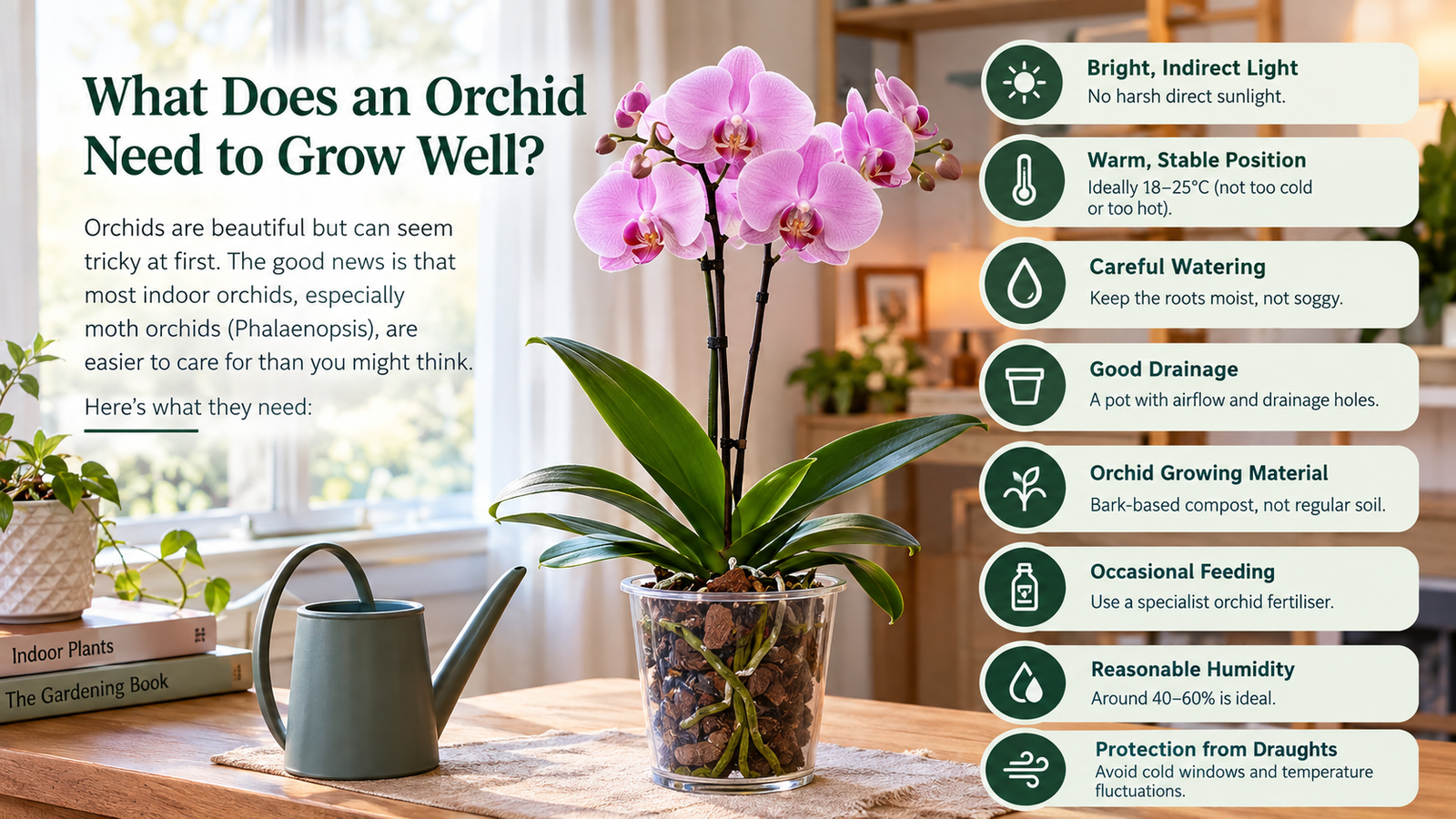
For healthy growth, it mainly needs:
- Bright, indirect light
- A warm, stable position
- Careful watering
- Good drainage
- Orchid-specific growing material
- Occasional feeding during active growth
- Reasonable humidity
- Protection from cold draughts and sudden temperature changes
The most important principle is to avoid extremes. Orchids should not be kept constantly wet, but they should not be allowed to become completely dry either. For moth orchids, keeping the roots healthy is one of the keys to successful long term growth.
How Much Light Does an Orchid Need?
Light is important for both healthy leaves and future flowers.
Most indoor orchids prefer bright light without strong direct sunlight. An east or west facing windowsill can work well, while a bright north facing position may also be suitable depending on the amount of available daylight.
A common mistake is placing an orchid directly against a very sunny south facing window in summer. Strong sunlight can scorch the leaves.
On the other hand, a very dark corner may not provide enough light for healthy growth or flowering.
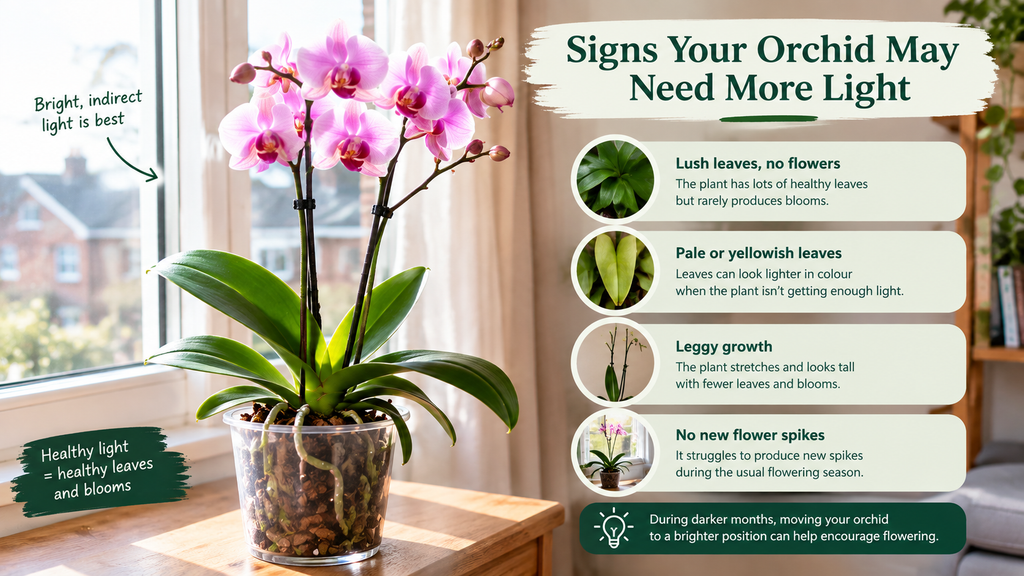
Signs Your Orchid May Need More Light
If your orchid is producing lots of healthy leaves but rarely flowers, consider whether it is receiving enough bright light.
During darker parts of the year, moving the plant to a brighter position can help. RHS guidance specifically recommends bright light during winter to encourage flowering.
How Often Should You Water an Orchid?
There is no single watering schedule that works perfectly for every orchid because indoor temperature, light levels, pot size and growing material all affect how quickly the plant dries.
For a typical moth orchid, RHS guidance suggests watering around once a week during the growing season, with watering reduced somewhat during winter.
However, don’t water simply because seven days have passed.
Instead, check the plant and its growing material first.
A Simple Orchid Watering Method
- Give the orchid a thorough but controlled watering.
- Allow excess water to drain completely.
- Empty any water collected in the outer pot or saucer.
- Do not leave the roots sitting in water.
- Allow the growing material to become slightly less wet before watering again.
The biggest problem with orchid watering is often overwatering. Constantly wet roots can eventually rot, while extremely dry roots can shrivel and become damaged.
What Water Is Best for Orchids?
If possible, rainwater can be a good choice for orchids. RHS also recommends boiled water, allowed to cool, as an alternative for many indoor orchids.
This can be particularly useful in areas with hard water.
If you use tap water, avoid making the growing material permanently saturated and always allow excess water to drain away.
The water should also be around room temperature rather than extremely cold.
Should You Mist an Orchid?
Misting is often presented as essential orchid care, but it is not necessarily required for a healthy moth orchid.
RHS advice notes that there are other ways of supporting humidity, and its guidance warns against getting water into the crown of the plant. Water sitting in the crown can create problems.
If you do mist, avoid soaking the flowers because water droplets can leave marks on the petals.
A better approach is to focus on the overall growing environment rather than repeatedly spraying the plant.
Where Should You Keep an Orchid in a UK Home?
A bright windowsill is often a good location, provided the plant is protected from strong direct sunlight.
Keep the orchid away from:
- Cold draughts
- Very cold windows during winter
- Direct heat from radiators
- Heat-producing appliances
- Areas with large temperature fluctuations
Moth orchids prefer consistently warm conditions. RHS recommends keeping them above around 16°C and avoiding draughts and sudden temperature changes.
This is particularly relevant in UK homes during winter.
A windowsill may look ideal, but check that the plant is not sitting directly next to a cold draught or a hot radiator.
How to Feed an Orchid
Orchids do need nutrients, but more fertiliser does not mean more flowers.
During the growing season, use a specialist orchid fertiliser according to the manufacturer’s instructions. RHS recommends light but regular feeding during active growth.
Avoid overfeeding.
A useful approach is to occasionally water without fertiliser so that accumulated salts can be flushed from the growing material. RHS recommends watering without feed every fourth watering in its moth orchid guidance.
During winter, feeding should generally be reduced because growth and light levels are lower.
What Compost Does an Orchid Need?
Don’t treat an orchid like an ordinary houseplant.
Many commonly grown indoor orchids are epiphytes, meaning they naturally grow attached to other plants rather than growing in ordinary garden soil.
For this reason, moth orchids are generally grown in bark-based orchid compost rather than standard multipurpose houseplant compost.
Ordinary compost can hold too much moisture around the roots and reduce the airflow that orchids need.
When Should You Repot an Orchid?
You don’t normally need to repot a healthy moth orchid every few months.
RHS guidance suggests repotting approximately every two years or so, mainly to refresh the bark-based growing material.
You may also need to consider repotting if:
- The growing material has broken down significantly
- The plant has outgrown its container
- Drainage has become poor
- The roots are showing signs of serious problems
Don’t automatically cut healthy aerial roots just because they are growing outside the pot. These roots are normal for moth orchids and help the plant interact with its environment.
How to Get an Orchid to Rebloom
One of the most common questions about orchid care is what to do after the flowers disappear.
First, don’t throw the plant away.
Moth orchids can continue growing and flowering for many years when properly cared for.
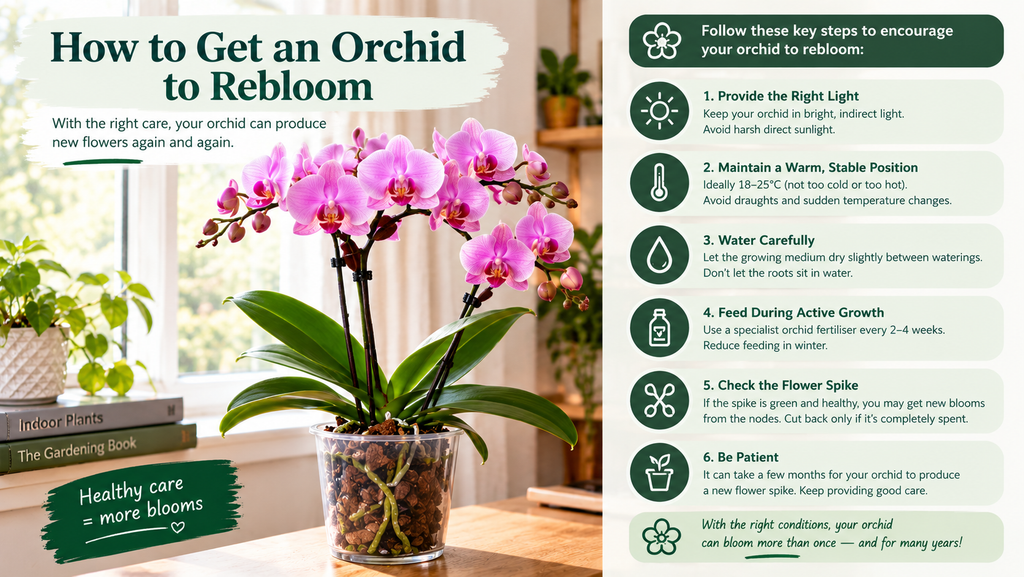
After flowering:
- Continue providing suitable light.
- Maintain appropriate watering.
- Keep the plant warm and away from draughts.
- Continue feeding appropriately during active growth.
- Inspect the flower spike before cutting it.
- Give the plant time to produce another flowering stem.
Depending on the condition of the flower spike, cutting it back can encourage further growth. RHS guidance notes that new flower stems can emerge from nodes on an existing spike, although cutting the spike lower down can sometimes result in a longer wait before flowering again.
Don’t expect an orchid to rebloom immediately. The timing varies according to the plant and growing conditions.
What Are the Benefits of Proper Orchid Care?
Good orchid care is not simply about keeping the plant alive.
With suitable conditions, a healthy orchid can:
- Produce flowers repeatedly
- Remain attractive between flowering periods
- Continue growing for several years
- Become a long-term houseplant rather than a short-lived decoration
- Require relatively little maintenance once its routine is established
Moth orchids are particularly rewarding because their flowers can last for months and they can bloom at different times of the year.
Common Orchid Problems and What They Mean
Yellow Leaves
An occasional older leaf turning yellow does not necessarily mean something is seriously wrong.
However, widespread yellowing can indicate that growing conditions need attention. Check the watering routine, light levels, roots and overall health of the plant rather than immediately adding more water or fertiliser.
Drooping or Wrinkled Leaves
Drooping leaves can have several possible causes, including watering problems or root damage.
Don’t automatically assume the orchid needs more water. If the roots have been kept too wet and have started to rot, adding more water can make the situation worse.
Brown or Rotten Roots
Healthy roots should generally feel firm.
Soft, damaged or rotting roots can be associated with excessive moisture and poor drainage.
Check whether water is collecting around the roots and make sure the pot can drain freely.
Orchid Has Lots of Leaves but No Flowers
This can be frustrating.
Start by checking the amount of light the orchid receives. A plant that is healthy but kept in a position with insufficient light may struggle to flower.
Temperature and seasonal conditions can also influence flowering.
Flower Buds Falling Off
Sudden temperature changes and cold draughts can cause flower buds to drop.
This is one reason to avoid placing orchids next to frequently opened cold windows or in areas where temperatures fluctuate significantly.
Common Orchid Care Mistakes to Avoid
1. Watering on a Strict Schedule
A weekly routine can be useful as a starting point, but always consider the plant’s actual condition.
2. Leaving the Pot in Water
Orchid roots need oxygen as well as moisture. Always allow excess water to drain away.
3. Using Ordinary Compost
Standard houseplant compost is generally unsuitable for moth orchids. Use an appropriate orchid growing medium instead.
4. Putting the Orchid in Strong Summer Sun
Bright light is good, but intense direct sunlight can scorch leaves.
5. Keeping It Next to a Radiator
Radiators can create excessive heat and very dry conditions immediately around the plant.
6. Cutting Healthy Aerial Roots;Learn how to care for orchids in the UK, including watering, light, feeding, repotting, common problems and how to encourage new blooms.:k;
Position: Is the plant exposed to a cold draught or excessive heat?
This short routine can help you spot problems before they become serious.
Orchid Care Checklist
Before you finish, check that your orchid has:
- [ ] Bright, suitable light
- [ ] Protection from strong direct summer sun
- [ ] A warm, stable position
- [ ] Good drainage
- [ ] Orchid-specific growing material
- [ ] Controlled watering
- [ ] No standing water
- [ ] Appropriate feeding during active growth
- [ ] Protection from cold draughts
- [ ] Occasional repotting when needed
FrequentlKMy Asked Questions About Orchid Care;
How often should I water an orchid?
For a typical moth or+c+hid, watering around once a week during the growing season is a useful starting point, but the actual frequency depends on conditions. Reduce watering somewhat during winter and never leave the plant standing in water.
Should orchids be kept in direct sunlight?
Generally, no. Most indoor orchids prefer bright light rather than strong direct sunlight. Direct summer sun can scorch the leaves, so a bright east- or west-facing position can often work well.
Why are my orchid leaves turning yellow?
Yellow leaves can have several causes, including natural ageing, watering problems or unsuitable growing conditions. Look at the whole plant rather than assuming that yellow leaves automatically mean it needs more water.
How long do orchid flowers last?
Moth orchid flowers can remain attractive for several months when the plant is kept in suitable conditions.k
How can I m
ake my orchid flower again?
Give it suitable brig-*ht light, appropriate watering, warmth and proper nutrition during active growth. After flowering, continue caring for the plant rather than discarding it. A suitable change in seasonal conditions can also contribute to renewed flowering.
Should I cut off an orchid flower spike?
It depends on the condition of the spike. A healthy green spike may produce another flowering stem from a node, while a completely spent or dead spike can be treated differently. RHS guidance describes cutting back spent spikes and notes that new growth can emerge from nodes.
Can orchids grow successfully in UK homes?
Yes. Moth orchids are particularly suitable for indoor growing and can do well in centrally heated homes when given suitable light, warmth and careful watering.
Should I put my orchid near a radiator?
It is better to avoid placing an orchid directly next to a radiator or heater. Orchids prefer stable temperature:K”need special compost?
Most commonly grown moth orchids should be grown in a suitable bark-based orchid growing edium rather than ordinary houseplant compost.|
Final Thoughts
Successful orchid care is mainly about getting a few basic things right: give the plant enough bright light, avoid extremes of temperature, water carefully, provide good drainage and use the right growing medium.
You don’t need to constantly fuss over an orchid. In fact, overwatering and excessive attention can sometimes create more problems than neglect.
If your orchid has finished flowering, don’t assume it has reached the end of its life. Moth orchids can remain healthy and produce new flowers for years when their basic needs are met.
Once you understand what your particular orchid needs, caring for it becomes a simple routine rather than a guessing game.

1 thought on “How to Care for Orchids in the UK: A Simple Guide”