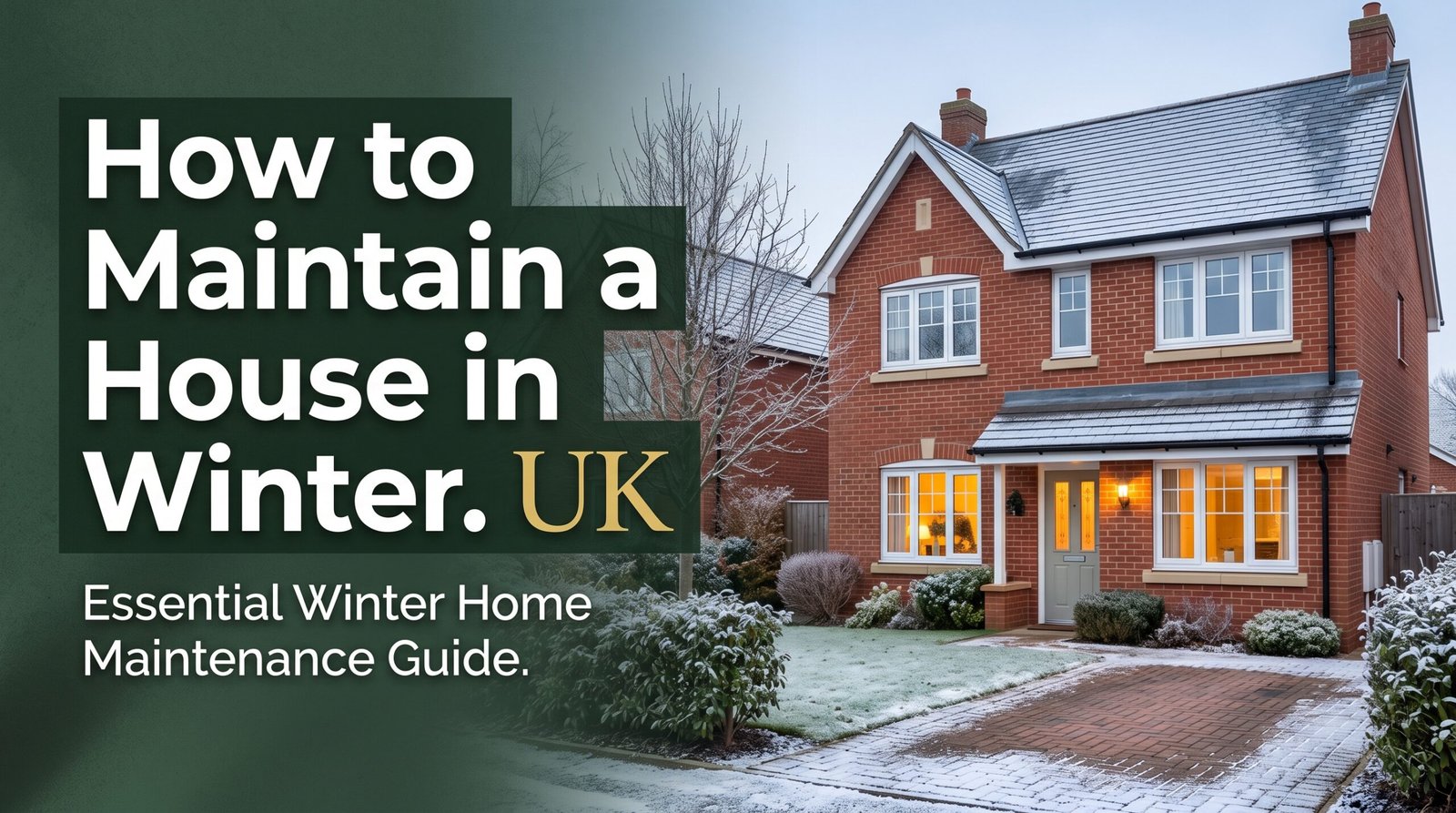
Winter puts extra pressure on a house. Heating systems work harder, condensation becomes more noticeable, gutters deal with heavy rain and leaves, and exposed pipes can become vulnerable during a hard frost.
The good news is that winter maintenance does not have to mean spending every weekend repairing things. A small number of checks, carried out before and during the colder months, can help you spot problems before they become expensive repairs.
This guide explains how to maintain a house in winter in the UK, including the jobs worth doing yourself, the checks that are better left to a professional, and the problems you should not ignore.
Winter house maintenance: the essentials
If you only have time for a few jobs, prioritise these:
- Check that your heating system is working properly.
- Arrange a boiler service if it is due.
- Check your roof, gutters and downpipes.
- Protect exposed water pipes from freezing.
- Find and check your internal stop tap.
- Reduce condensation without blocking ventilation.
- Check doors and windows for excessive draughts.
- Test smoke and carbon monoxide alarms.
- Look around the property for signs of leaks or damp.
- Secure garden furniture and other loose items before strong winds.
- Keep a torch, basic supplies and important emergency numbers accessible.
1. Check your heating before you need it
A boiler failure is inconvenient at any time, but it is particularly unpleasant during a cold spell.
Before winter gets properly underway, turn your heating on and check that:
- The boiler starts normally.
- Radiators are heating evenly.
- The thermostat responds correctly.
- Thermostatic radiator valves move properly.
- There are no unusual noises or smells.
- Hot water is working as expected.
- The boiler is not repeatedly losing pressure.
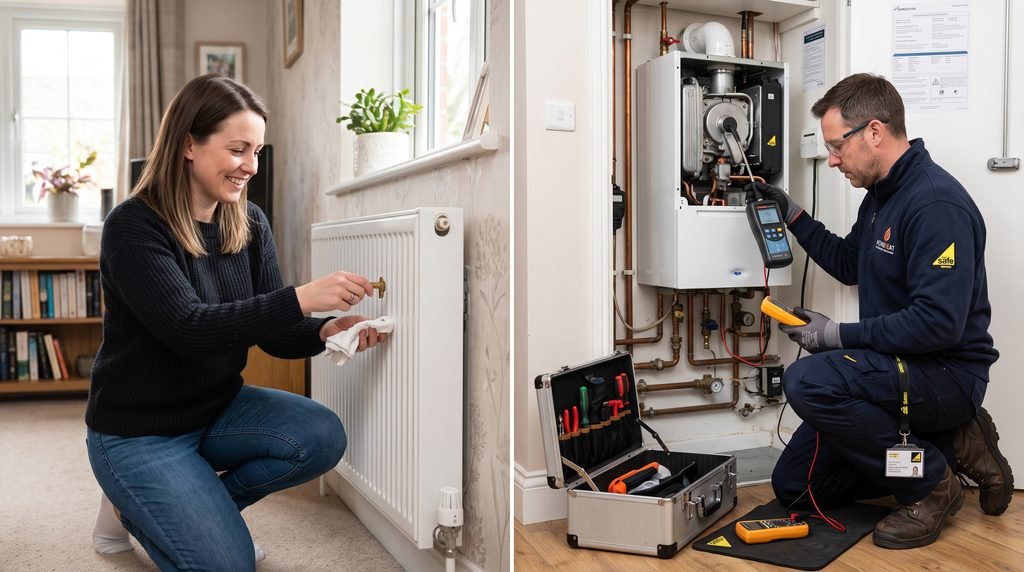
If a radiator is cold at the top but warmer at the bottom, trapped air may be affecting its performance and it may need bleeding. If the problem is persistent or you are unsure what is causing it, have the heating system checked rather than repeatedly trying to fix it yourself.
Should you service your boiler every year?
If you have a gas boiler, arrange servicing with a Gas Safe registered engineer and follow the manufacturer’s maintenance recommendations.
Do not attempt to repair or dismantle a gas appliance yourself.
A service is also a good opportunity for an engineer to identify problems before the boiler is under heavy winter demand.
For households using oil, solid fuel or other heating systems, use the appropriate qualified professional and follow the appliance manufacturer’s servicing requirements.
2. Keep your home warm without blocking ventilation
Winter maintenance is not simply about keeping cold air out.
A house that is warm but poorly ventilated can develop condensation, damp and mould.
Everyday activities such as showering, cooking, washing clothes and drying laundry add moisture to indoor air. During winter, that moisture can condense on colder surfaces such as windows, external walls and corners.
Practical ways to control winter condensation
Try to:
- Use bathroom extractor fans when showering or bathing.
- Use kitchen extraction when cooking.
- Keep moisture-producing rooms ventilated.
- Avoid drying wet clothes directly on radiators where possible.
- Wipe excessive condensation from windows.
- Leave some space between large pieces of furniture and cold external walls.
- Keep trickle vents clear.
- Avoid blocking air bricks or other permanent ventilation.
You do not need to leave windows wide open all day. Short periods of ventilation can help remove humid air without unnecessarily losing large amounts of heat.
Don’t solve condensation by simply sealing everything
Draught-proofing can make a home more comfortable, but permanently blocking ventilation openings can create another problem.
This is particularly important in older UK homes where existing gaps may have been contributing to background ventilation.
If you are improving insulation, replacing windows or carrying out major energy-efficiency work, consider ventilation at the same time.
3. Protect your pipes from freezing
Frozen pipes are one of the winter problems worth preventing rather than dealing with afterwards.
Water expands as it freezes, and a frozen pipe can eventually split. When the ice melts, the damaged pipe can release water into the property.
Pay particular attention to pipework in:
- Lofts
- Garages
- Unheated cupboards
- Outbuildings
- Areas close to external walls
- Other poorly heated spaces
Check your stop tap
One of the simplest but most useful winter preparations is knowing where your stop tap or stopcock is.
It is commonly found under a kitchen sink, although its location varies between properties.
Make sure you know how to turn off the water supply.
If a pipe bursts, being able to shut off the water quickly can limit the amount of damage while you arrange a repair.
What about an outside tap?
If your property has an outside tap, check whether the pipework leading to it can be isolated and drained.
The exact setup differs between homes, so follow the manufacturer’s or plumbing system’s instructions. If you are unsure how your outside tap is configured, a plumber can check it.
4. Clear your gutters and check the downpipes
Autumn leaves and debris can build up in gutters just before winter.
A blocked gutter may stop rainwater flowing away from the roof properly. Water can then overflow against walls, windows or other parts of the building.
What to look for
Check for:
- Leaves and accumulated debris
- Sagging sections
- Cracked or damaged guttering
- Leaking joints
- Loose brackets
- Blocked downpipes
- Water overflowing during rainfall
If your gutters are high or difficult to access safely, don’t put yourself at risk trying to clean them.
A professional gutter-cleaning service may be a much safer option than climbing an unsuitable ladder.
5. Inspect the roof before bad weather arrives
You do not necessarily need to climb onto the roof to check it.
From ground level, look for obvious signs such as:
- Missing roof tiles
- Slipped or broken slates
- Damaged flashing
- Loose ridge tiles
- Damaged chimney components
- Sagging areas
- Debris or visible damage following a storm
After a major storm
It is worth looking at the roof again after particularly strong winds.
Do not climb onto a wet, icy or damaged roof to investigate it yourself.
If you notice something that looks unsafe or you have water entering the property, arrange an inspection by a suitably qualified roofing professional.
6. Check windows and doors for draughts
A cold draught around a window or external door can make a room uncomfortable and increase the amount of heating needed to maintain a comfortable temperature.
Check around:
- Window frames
- External doors
- Letterboxes
- Door thresholds
- Loft hatches
- Other obvious gaps
Simple draught-proofing can sometimes make a noticeable difference.
However, don’t seal up intentional ventilation openings or cover trickle vents simply because they feel cold.
7. Check your loft insulation and loft space
Heat naturally rises, so the loft is an important part of winter home maintenance.
Check whether your insulation appears:
- Evenly distributed
- Dry
- Undamaged
- Free from obvious gaps
- Not compressed unnecessarily
Don’t simply add insulation everywhere without considering the construction of your loft.
Water tanks, pipes, ventilation and electrical equipment may require specific treatment or access arrangements. If you are unsure, get appropriate professional advice.
8. Watch for damp and mould
Winter is often when previously minor moisture problems become much more obvious.
Look regularly at:
- Window corners
- External walls
- Behind wardrobes
- Around ceilings
- Around windows and doors
- Areas near plumbing
- Rooms with poor ventilation
Black spots or mould growth should not simply be painted over.
When damp needs investigation
Get professional advice if you notice:
- Persistent damp patches
- Peeling plaster or wallpaper
- Repeated mould despite improving ventilation
- Water coming through an external wall
- A ceiling stain that keeps growing
- A suspected plumbing leak
- Damp around the roof or chimney
- A musty smell with no obvious source
The solution depends on the cause. Condensation, a leaking roof and a plumbing problem require very different repairs.
9. Test smoke and carbon monoxide alarms
Winter often means more time indoors and greater use of heating and fuel-burning appliances.
Test your smoke alarms and carbon monoxide alarms according to the manufacturer’s instructions.
If you have a gas boiler, log burner, open fire, oil appliance or another fixed combustion appliance, make sure you understand the carbon monoxide safety requirements that apply to your property.
Rules for rented homes can differ across England, Scotland, Wales and Northern Ireland, so landlords should check the rules that apply in their location.
Never rely on an alarm as a substitute for proper appliance installation, servicing and ventilation.
10. If you have a fireplace or wood burner, check it before use
If you use an open fire or wood-burning stove, the chimney and flue need appropriate maintenance.
Use a suitably qualified chimney professional where appropriate and follow the appliance manufacturer’s instructions.
Never assume that because a fireplace worked safely last winter it automatically remains safe this winter.
11. Prepare the outside of your home
Winter maintenance isn’t just about the inside of the house.
Garden furniture
Secure or store lightweight furniture, trampolines, pots and other loose objects.
Trees and branches
Look for dead or obviously dangerous branches near:
- Your house
- Conservatory
- Garage
- Driveway
- Garden buildings
- Power lines
Large or potentially dangerous trees should be assessed by a suitably qualified tree professional.
Paths and steps
Keep paths reasonably clear of:
- Leaves
- Moss
- Debris
- Standing water
During freezing conditions, these areas can become slippery.
12. Check your drains and outside gullies
Blocked gullies can become particularly troublesome during periods of heavy winter rain.
Check that:
- Drain covers are visible.
- Gullies aren’t packed with leaves.
- Water can flow away freely.
- Downpipes discharge correctly.
- There are no obvious signs of repeated standing water.
If water repeatedly collects against the building, don’t simply keep clearing the surface.
There may be a drainage problem that requires investigation.
13. Keep an eye on the house during cold spells
Winter maintenance is not something you do once and forget.
After particularly cold, wet or windy weather, take a few minutes to walk around the property.
Look for:
- New roof damage
- Water stains
- Overflowing gutters
- Frozen external pipework
- Condensation
- New mould
- Damaged fences
- Fallen branches
- Blocked drains
- Signs of water entering the property
Catching a small problem early is usually easier than discovering it after several weeks of bad weather.
A simple winter maintenance schedule
You don’t need to complete everything on one day.
Before winter
Ideally, complete the bigger preparation jobs before the coldest weather arrives:
- Service the boiler if due.
- Check heating controls.
- Inspect the roof.
- Clear gutters and downpipes.
- Check exposed pipes.
- Find the stop tap.
- Check loft insulation.
- Check windows and doors for excessive draughts.
- Test alarms.
- Check for existing damp or leaks.
- Arrange chimney sweeping if required.
- Secure garden furniture and loose objects.
During winter
Keep an eye on:
- Condensation
- Mould
- Boiler performance
- Radiators
- Roof damage after storms
- Guttering during heavy rain
- Frozen pipes
- Damp patches
- External drainage
After severe weather
Do a quick visual inspection from a safe position.
If you see damage to the roof, chimney, electrical installation or another potentially dangerous part of the property, don’t attempt an unsafe DIY repair.
What can you do yourself and what needs a professional?
| Task | Usually suitable for DIY? | Professional recommended? |
|---|---|---|
| Testing smoke alarms | Yes | Not usually |
| Checking for draughts | Yes | Not usually |
| Cleaning accessible condensation | Yes | Not usually |
| Fitting basic pipe insulation | Often | If access is difficult |
| Checking the stop tap | Yes | If seized or faulty |
| Clearing accessible gutters | Sometimes | Yes if height/access is unsafe |
| Checking the roof from ground level | Yes | Yes for repairs |
| Bleeding a radiator | Usually | If the heating problem continues |
| Boiler servicing | No | Yes |
| Gas appliance repair | No | Gas Safe registered engineer |
| Major damp investigation | Not usually | Yes |
| Chimney sweeping | Usually best outsourced | Qualified/appropriate professional |
| Structural roof repairs | No | Yes |
| Major electrical work | No | Qualified electrician |
The important distinction is that checking something and repairing something are not the same job.
A homeowner can safely identify that a roof tile appears damaged without climbing onto the roof to replace it.
Common winter maintenance mistakes
Waiting until the first freeze
Pipe insulation and heating checks are much easier before temperatures drop.
Blocking ventilation to stop draughts
This can reduce airflow and contribute to condensation and mould.
Painting over mould
This hides the visible problem without necessarily dealing with the moisture source.
Ignoring a small roof leak
A minor leak can become much more disruptive during prolonged rain or wind.
Climbing onto the roof yourself
Wet, icy and damaged roofs can be extremely dangerous.
Assuming condensation is always the cause of damp
Condensation is common, but penetrating damp, plumbing leaks and other building defects can produce similar symptoms.
Leaving the stop tap unchecked
Knowing where it is only helps if you can actually operate it when you need to.
Leaving loose garden items outside
A calm garden can become hazardous very quickly during strong winds.
Winter house maintenance checklist
Save or print this checklist for a quick seasonal inspection:
Heating
- Boiler working normally
- Boiler service arranged if due
- Radiators checked
- Thermostat working
- Heating controls working
Plumbing
- Stop tap located
- Stop tap operates
- Exposed pipes insulated
- Outside tap checked
- No visible leaks
Roof and gutters
- Roof visually checked
- No obvious missing tiles/slates
- Gutters cleared
- Downpipes clear
- No obvious leaks
Damp and ventilation
- Trickle vents clear
- Bathroom extractor working
- Kitchen extraction working
- Condensation monitored
- No unexplained damp patches
- Furniture not tightly pushed against cold external walls
Safety
- Smoke alarms tested
- CO alarms tested where appropriate
- Gas appliances professionally maintained
- Fireplace/chimney maintained if applicable
- Emergency numbers accessible
Outside
- Garden furniture secured
- Dangerous branches checked
- Paths reasonably clear
- Gullies/drains clear
- Fences checked after storms
Frequently asked questions
When should I prepare my house for winter in the UK?
Ideally, start in early autumn, before the coldest weather arrives. Heating, gutters, roof condition, exposed pipes and ventilation are worth checking before you need them. The exact timing varies with the property and local weather.
How do I prevent pipes from freezing in a UK house?
Insulate vulnerable exposed pipework, particularly in unheated areas such as lofts and garages. Make sure you know where the stop tap is and how to shut off the water supply if a pipe bursts.
Should I keep my house warm all winter?
A suitably heated home is generally easier to keep comfortable and can help reduce condensation. Individual heating needs vary according to the occupants, property and weather.
Should I close trickle vents in winter?
Generally, no. Trickle vents are designed to provide background ventilation, so they should not be blocked simply to keep cold air out.
How often should I clean my gutters?
There is no single frequency that suits every house. Properties surrounded by trees may need more frequent checks because leaves and debris accumulate faster. At minimum, check them before winter and again if you notice overflowing during rainfall.
Can winter condensation cause mould?
Yes. Moist indoor air can condense on cold surfaces, particularly during winter, and persistent condensation can contribute to mould growth. Improving ventilation, managing moisture and keeping the property adequately warm can help, but persistent damp should be investigated to identify the underlying cause.
Do I need a professional to check my boiler?
Gas boiler servicing and gas appliance work should be carried out by an appropriately qualified Gas Safe registered engineer. Do not attempt gas-appliance repairs yourself.
What should I do if my roof starts leaking in winter?
If safe to do so, contain water inside the property and move vulnerable belongings away from the affected area. Do not climb onto a wet or damaged roof. Arrange an appropriate roofing professional to inspect the problem, particularly if water is entering near electrical fittings.
Final thoughts
Good winter house maintenance is mostly about finding small problems before cold, wet and windy weather turns them into larger ones.
You don’t need to completely overhaul your home every autumn. Start with the areas most exposed to winter conditions: heating, pipes, roof, gutters, ventilation, damp and external areas.
For a typical UK home, a couple of hours spent checking these areas before winter can give you a much better chance of spotting problems early.
And when a job involves gas, major electrical work, structural repairs, difficult roof access or serious damp, knowing when not to DIY is just as important as knowing what to check yourself.
