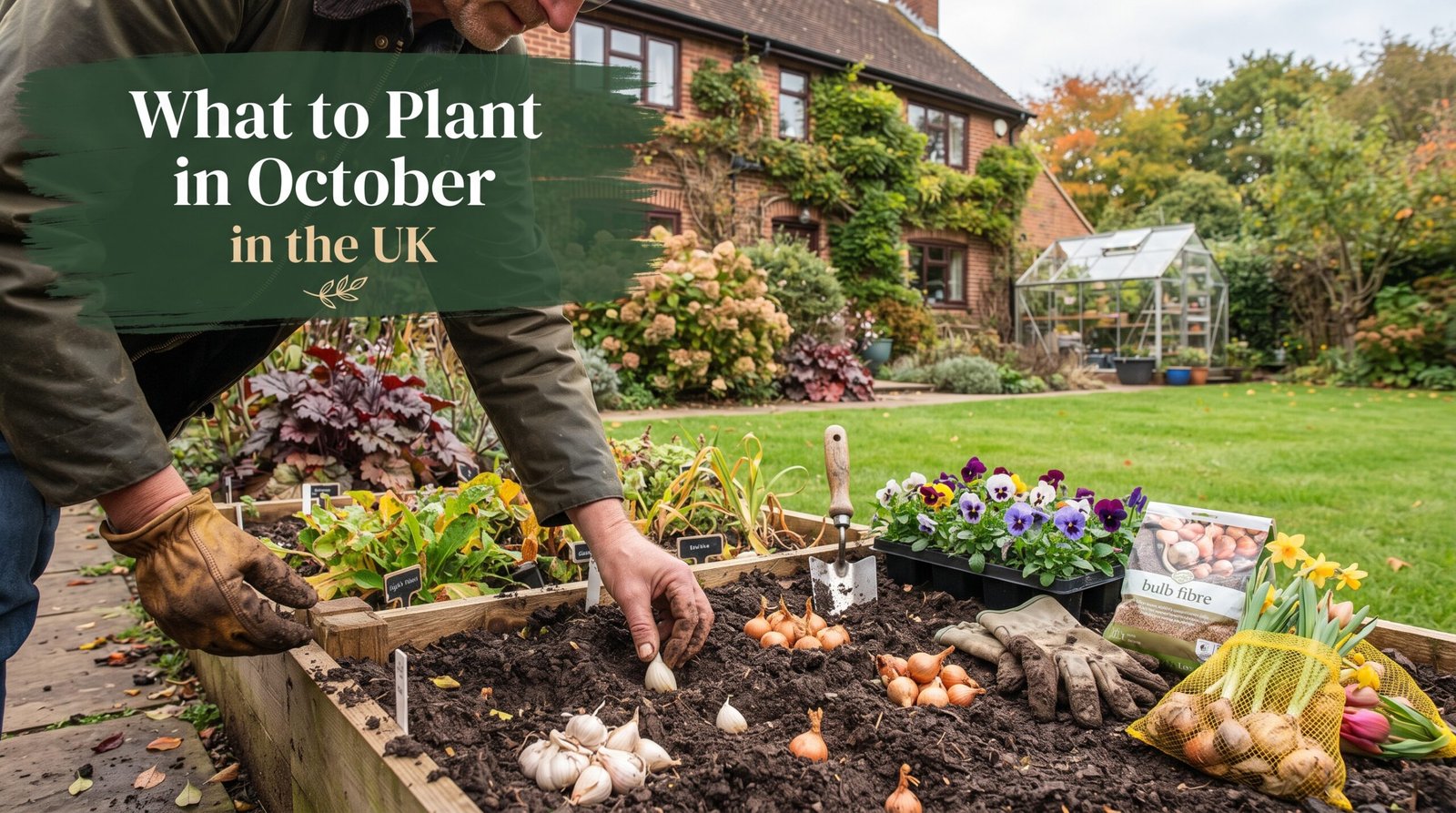
In UK October may feel like the end of the gardening season, but there is still plenty you can plant in a UK garden. The cooler weather and moist soil can actually make autumn a useful time for getting certain plants established before winter.
So, what to plant in October in the UK?
Depending on your location and garden conditions, October is a good time to plant garlic, overwintering onions, spring cabbages, some broad beans, spring-flowering bulbs, hardy flowers and certain fruit plants. It is also a useful month for planting new perennials and preparing the ground for next year’s growth.
The important thing is to choose plants that can cope with cooler conditions rather than treating October like spring.
Vegetables to Plant in October in the UK
If you want to keep growing food through the colder months, October still gives you several options.
1. Garlic
Garlic is one of the easiest and most useful crops to plant in autumn.
Individual garlic cloves can be planted in October, giving them time to establish roots before winter. Garlic generally benefits from a period of cold weather. It is harvested the following year, usually in late spring or summer depending on the variety and growing conditions.
Choose a sunny position with free draining soil. Avoid planting garlic in ground that stays waterlogged during winter.
Tip: Buy named garlic varieties intended for growing rather than using supermarket garlic, as the latter may not be well suited to the UK climate.
2. Overwintering Onion Sets
October is also a useful time to finish planting overwintering onion sets.
These small onions are planted in autumn and remain in the ground through winter before developing further in spring and early summer. The RHS lists overwintering onion sets among the vegetables suitable for October planting.
Choose a sunny, reasonably sheltered area with soil that drains well.
If your garden soil becomes very wet during winter, raised beds or containers can be a better option.
3. Spring Cabbages
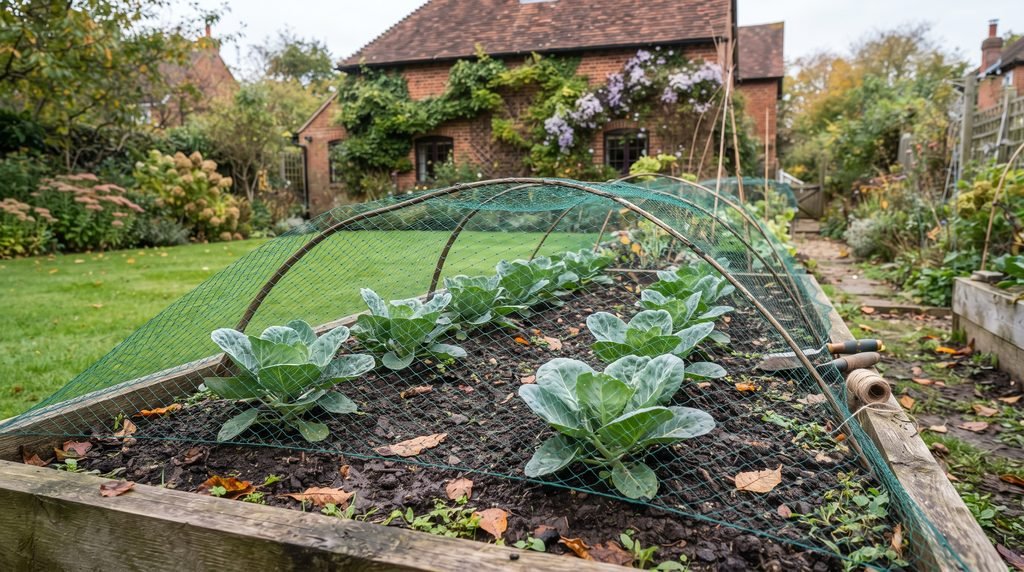
Spring cabbages can be planted out in October.
These plants will remain in the garden through the colder months and develop into harvestable crops later in the season. The RHS recommends protecting spring cabbages from pigeons with securely fitted netting.
Make sure the netting is properly secured and does not create a hazard for birds or other wildlife.
4. Broad Beans
Broad beans are another option for October, although they are more suitable for certain parts of the UK than others.
In mild areas or sheltered gardens, hardy varieties can be sown outdoors in autumn. The RHS notes that October and November sowing is possible with suitable hardy varieties, particularly in milder parts of the UK.
A variety such as ‘Aquadulce’ is commonly recommended for autumn sowing.
If your garden is exposed, very cold or prone to waterlogging, sowing in pots under protection may be more reliable.
5. Overwintering Peas
In mild areas, you can also sow suitable overwintering pea varieties in October.
The RHS recommends varieties such as ‘Douce Provence’ or ‘Meteor’ for autumn sowing, but specifically notes that this approach is best suited to mild areas.
This is therefore not something every UK gardener needs to do. Local conditions matter.
6. Winter Lettuce
Winter lettuce can also be included in an October planting plan, particularly when grown under some protection.
A greenhouse, cold frame or sheltered growing area can extend the season and provide better conditions than an exposed outdoor bed.
If you are growing salad crops in October, pay attention to drainage and avoid keeping the growing medium excessively wet.
Flowers to Plant in October
October isn’t just about vegetables. It can also be a good month to establish plants that will provide colour in spring and beyond.
7. Spring-Flowering Bulbs
Spring-flowering bulbs are one of the most obvious choices for autumn planting.
Depending on the bulb and your local conditions, you can plant bulbs such as:
- Daffodils
- Crocuses
- Hyacinths
- Tulips
- Other hardy spring-flowering bulbs
The RHS recommends planting spring-flowering bulbs during autumn. Its bulb guidance notes that daffodils, crocuses and hyacinths are preferably planted by the end of September, while tulips are generally planted later, around October or November.
That means October is still a useful bulb-planting month, particularly for tulips and bulbs that are suitable for later autumn planting.
Don’t worry if you haven’t planted everything in September. Just check the recommended planting time for the particular bulb you have bought.
8. Winter Pansies and Violas
If you want colour during the colder months, winter pansies and violas are worth considering.
The RHS recommends planting wallflowers, forget-me-nots, Bellis, Primula, Viola and other spring bedding plants during October.
They can be planted in borders, containers, pots and window boxes, making them particularly useful if you have a small garden.
9. Wallflowers
Wallflowers can provide attractive flowers in spring and work well alongside spring bulbs.
They can be planted in prepared ground or containers during October, according to the RHS.
When choosing a planting position, look for an area with reasonable drainage and enough sunlight for healthy growth.
10. Primulas and Other Spring Bedding Plants
Primulas and similar spring bedding plants can also be planted during October.
They are particularly useful around paths, borders and containers where you want colour without needing a large amount of space.
For a small garden, a few containers filled with suitable autumn-planted bedding plants can create a surprisingly effective display.
Other Plants You Can Put in the Ground in October
October isn’t limited to annual flowers and vegetables.
11. Herbaceous Perennials
October can be a good time to plant new herbaceous perennials.
The RHS notes that autumn soil can still be relatively warm while having more moisture than during summer, making conditions favourable for establishing new plants.
This can be particularly useful when planting perennials that you want to establish before the following growing season.
Before planting, improve poor soil with suitable organic matter and make sure the chosen plant is appropriate for the light and drainage conditions of your garden.
12. Fruit Plants
October is also a useful time to think about fruit.
The RHS recommends planting pot-grown fruit during October and ordering bare-root fruit stock for planting later in winter.
This could include suitable fruit trees and bushes, depending on the size and conditions of your garden.
If you are planting fruit, don’t choose a variety based only on appearance. Consider:
- Available space
- Soil conditions
- Sunlight
- Mature plant size
- Pollination requirements
- Disease resistance
For a small garden, compact varieties can be much easier to manage.
13. Hardy Annuals
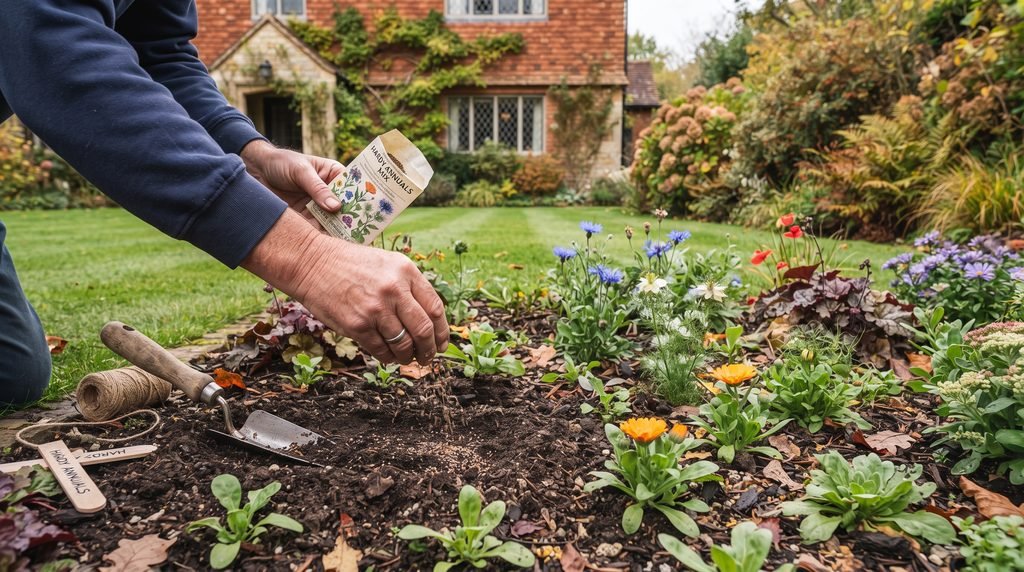
In mild areas, October can still be suitable for sowing some hardy annuals outdoors.
The RHS recommends sowing hardy annuals when the soil is moist in September and October. Autumn-sown plants can establish before winter and may flower earlier than spring-sown plants.
This is a good option if you want to create a colourful display without waiting until spring to start everything.
What About Tulips in October?
If you’re specifically interested in tulips, October is actually a useful month to start thinking about them.
The RHS recommends planting tulips in October and November.
Plant them in well-drained soil or suitable containers and choose a location where they will receive appropriate light.
If your soil becomes very wet during winter, containers or raised beds can help reduce the risk of bulbs sitting in saturated soil.
Can You Plant in Containers in October?
Absolutely.
You don’t need a large garden to take advantage of October planting.
Containers can be useful for:
- Garlic
- Onions
- Winter salads
- Spring bulbs
- Pansies
- Violas
- Primulas
- Some compact fruit plants
The main thing to remember is that containers can become colder and wetter than garden soil. Make sure they have drainage holes and use a suitable growing medium.
Place vulnerable containers somewhere sheltered if your garden is exposed to strong winds or severe winter weather.
What Should You Consider Before Planting in October?
October gardening is less about planting as much as possible and more about choosing the right plants for your conditions.
Check Your Soil
Avoid planting into soil that is saturated or heavily compacted.
If water sits on the surface after rain, improve drainage before putting in plants that dislike wet conditions.
Consider Your Local Climate
The UK has different growing conditions from one region to another.
A sheltered garden in southern England may have a very different October climate from an exposed garden in Scotland or a high-altitude location.
This is particularly important for autumn-sown broad beans and peas, which are more reliable in mild or sheltered conditions.
Protect Young Plants
Newly planted crops may need protection from:
- Pigeons
- Slugs and snails
- Strong winds
- Severe frost
- Excessive winter wet
Protection doesn’t have to mean complicated equipment. Netting, cloches, sheltered positions and sensible container placement can make a significant difference.
What Not to Plant in October
One common mistake is assuming that everything can be planted because the soil is still workable.
Some plants are better left until spring, particularly tender plants that are vulnerable to frost.
October is also not the ideal time to force every summer crop to continue growing outdoors. As daylight decreases and temperatures fall, many warm season plants naturally slow down.
Instead, concentrate on plants that are suited to autumn establishment.
A Simple October Planting Plan
If you are new to gardening, you don’t need to plant everything on this list.
A simple October plan could look like this:
For food:
- Plant garlic
- Plant overwintering onion sets
- Plant spring cabbages
- Try hardy broad beans if your conditions are suitable
- Consider winter lettuce under protection
For spring colour:
- Plant tulips
- Plant suitable spring bulbs
- Add winter pansies or violas
- Plant wallflowers
- Add primulas
For longer-term planting:
- Plant suitable perennials
- Plant pot-grown fruit
- Prepare areas for future bare-root fruit plants
This approach gives you something to grow now while also preparing the garden for the months ahead.
October Planting Checklist for UK Gardeners
Before you finish your October planting, run through this quick checklist:
☐ Plant garlic cloves ☐ Finish planting overwintering onion sets ☐ Plant spring cabbages ☐ Consider hardy broad beans in suitable areas ☐ Sow suitable overwintering peas in mild areas ☐ Plant tulips and suitable spring bulbs ☐ Add winter pansies and violas ☐ Plant wallflowers and primulas ☐ Consider hardy annuals ☐ Plant suitable herbaceous perennials ☐ Plant pot-grown fruit ☐ Check drainage before planting ☐ Protect young crops from birds and harsh weather
Final Thoughts
October can be a surprisingly productive month in a UK garden.
The focus simply changes from fast summer growth to establishing plants that can survive the colder months and reward you later. Garlic, overwintering onions, spring cabbages, suitable broad beans, tulips, winter bedding plants and new perennials are among the useful choices.
You don’t need a large garden either. A few containers, a sunny border or a small vegetable bed can be enough to make October planting worthwhile.
The best approach is to choose plants according to your local conditions rather than trying to plant everything at once. Check the variety’s recommended planting time, make sure your soil drains well and provide protection where necessary.
That way, your October garden can quietly get a head start on winter, spring and the growing season that follows.
