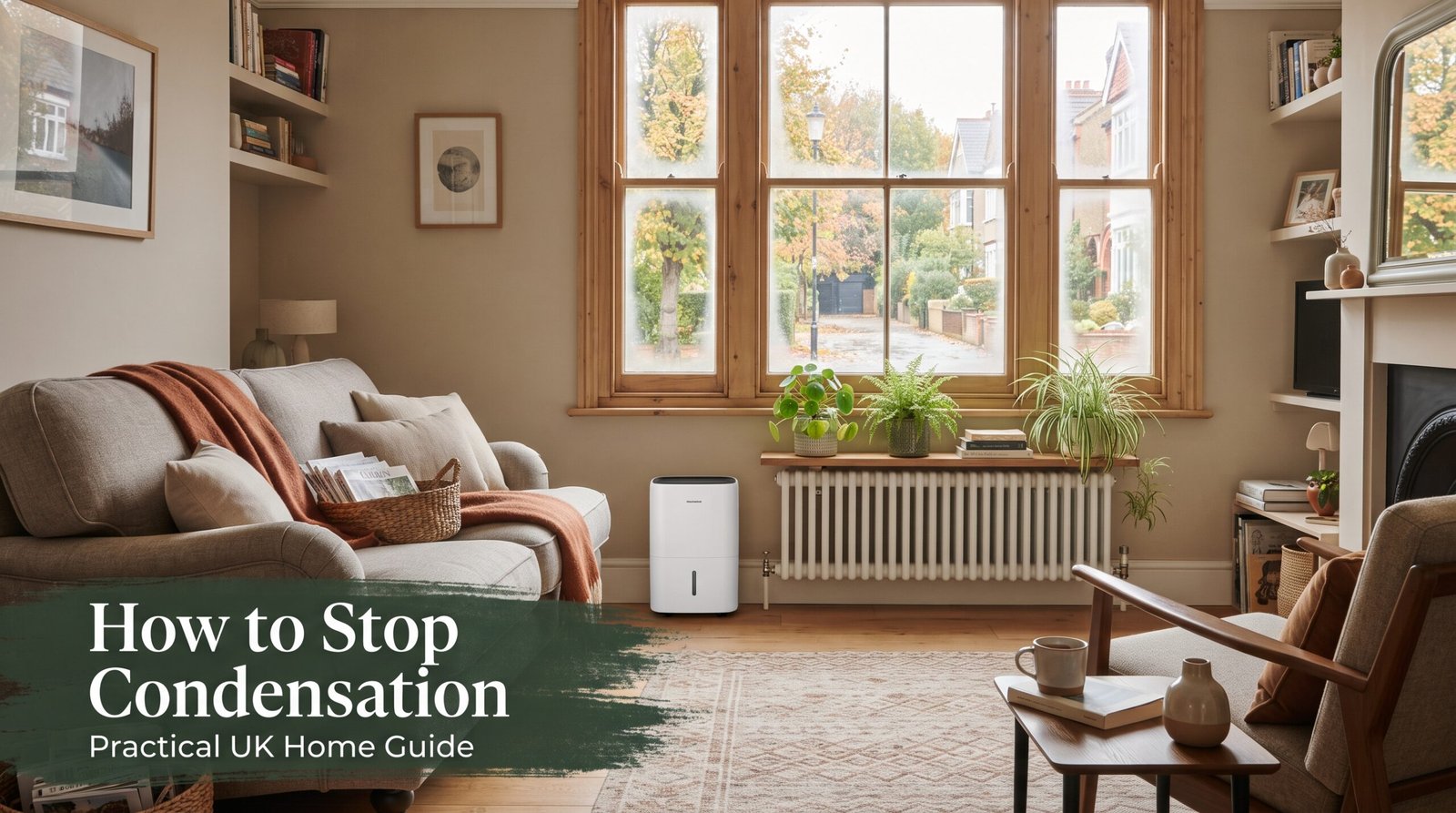
If you regularly wake up to water droplets on your windows, damp window sills or a musty smell in certain rooms, condensation could be the reason.
Condensation is particularly common in UK homes during colder weather. Everyday activities such as showering, cooking, washing clothes and even breathing add moisture to the indoor air. When that moist air comes into contact with a cold surface, such as a window or outside wall, the moisture can turn into water droplets.
A little condensation that disappears quickly is not usually a major concern. However, persistent condensation can contribute to damp and mould if the underlying moisture and ventilation problems are not addressed.
The good news is that there are several practical things you can do to stop condensation or significantly reduce it.
Why Does Condensation Happen?
Condensation occurs when moisture in warm indoor air meets a colder surface.
Think about a cold glass of water on a warm day. Water droplets form on the outside of the glass because the surrounding air cools against its cold surface.
A similar process happens inside your home.
Common sources of moisture include:
- Showering and bathing
- Cooking and boiling water
- Drying clothes indoors
- Washing dishes
- Breathing
- Using some types of unflued heating appliances
If this moisture cannot escape through adequate ventilation, it can settle on cold windows, walls and other surfaces. Over time, persistent moisture can contribute to mould growth.
1. Improve Ventilation
One of the most effective ways to reduce condensation is to allow moist air to leave your home.
Ventilation replaces stale, moisture-filled indoor air with fresher outdoor air. GOV.UK recommends keeping trickle vents open and unobstructed, and ensuring extractor fans are clean and working properly.
Use extractor fans
Use your bathroom extractor fan when showering or bathing and use the kitchen extractor when cooking.
Keep the bathroom or kitchen door closed while producing steam where practical. This helps prevent moisture from spreading throughout the rest of the house.
If your extractor fan continues running after you finish cooking or showering, allow it to do so rather than switching it off immediately.
Don’t block trickle vents
Many UK homes have small vents built into window frames.
These are called trickle vents and provide background ventilation. GOV.UK advises keeping them open and unblocked, including during winter.
It can feel counterintuitive to allow outside air into a heated home, but completely blocking ventilation can allow moisture to build up indoors.
Open windows when appropriate
Opening windows for short periods can help remove humid indoor air.
You do not necessarily need to leave windows wide open for hours. The exact approach depends on your home, weather and ventilation system.
The Energy Saving Trust recommends opening windows several times during the day where appropriate and keeping trickle vents clear.
2. Keep Your Home Warm
Cold surfaces make condensation more likely.
When walls, ceilings and windows become very cold, moisture in the indoor air is more likely to condense on them.
Keeping your home at a reasonably steady temperature can therefore help reduce the problem.
Some UK local authorities recommend around 18°C as a minimum room temperature for most people, with higher temperatures potentially appropriate for some older people, young children and people with certain health conditions.
However, heating advice should always take your household’s circumstances and energy costs into account.
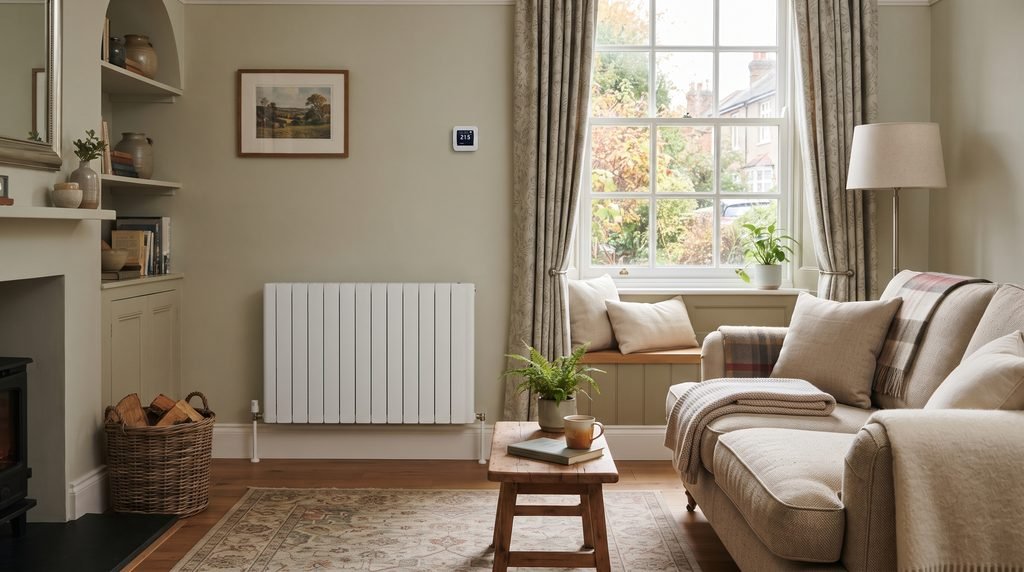
Avoid heating one room while leaving the rest very cold
If possible, avoid allowing parts of your home to become extremely cold while another room is heavily heated.
A more consistent temperature can help keep surfaces warmer and reduce the conditions in which condensation forms.
If heating costs are a concern, look into available energy-efficiency measures and support rather than simply turning heating off completely.
3. Stop Drying Wet Clothes on Radiators
Indoor laundry can add a surprising amount of moisture to your home.
Whenever possible, dry clothes outdoors.
If you need to dry clothes indoors, use a suitable room with ventilation. Keep the door closed and use an extractor fan or open a window where appropriate so moisture can escape rather than spreading around the house.
Try not to place wet clothes directly over radiators.
This can increase the amount of moisture released into the indoor air and can make condensation worse.
4. Control Steam When Cooking
Cooking can put a lot of moisture into the air.
There are several simple ways to reduce it.
Use your cooker hood or extractor fan
Turn the extractor on when cooking and allow it to remove steam from the kitchen.
Make sure the extractor is clean and functioning properly. GOV.UK specifically highlights adequate kitchen ventilation as an important part of controlling moisture.
Put lids on saucepans
Using lids helps keep steam inside the pan rather than allowing it to spread throughout your kitchen.
It can also make cooking more efficient.
Keep the kitchen door closed
Where practical, keeping the kitchen door closed while cooking can help stop humid air moving into colder rooms.
Continue ventilating the kitchen afterwards so the moisture can escape.
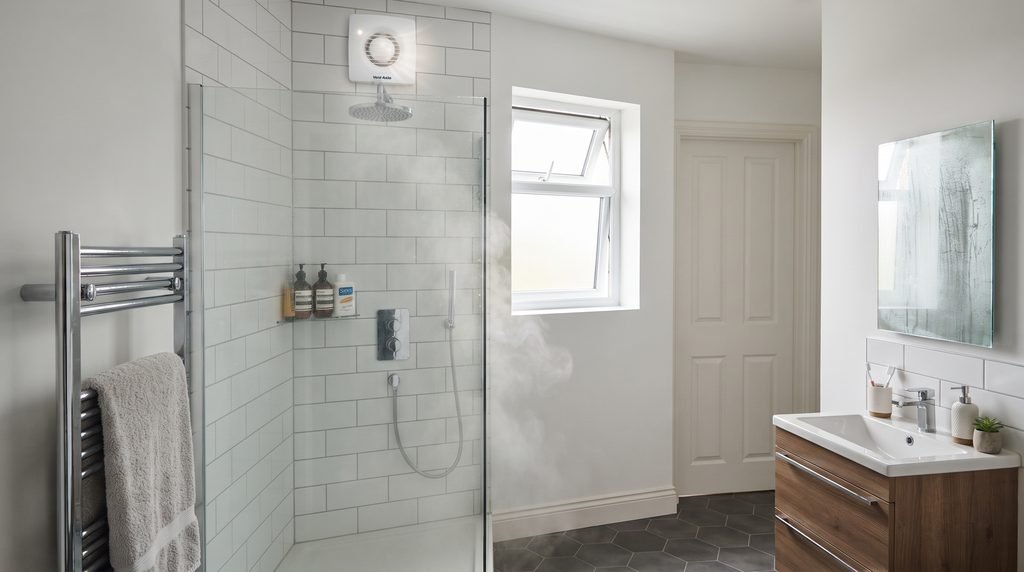
5. Reduce Moisture in the Bathroom
Bathrooms are one of the main sources of moisture in a home.
A hot shower can quickly fill the room with humid air.
To reduce condensation:
- Use the extractor fan while showering.
- Keep the bathroom door closed while producing steam.
- Ventilate the room afterwards.
- Wipe excess water from very wet surfaces where practical.
- Keep the extractor fan clean and unobstructed.
If you have a window, opening it slightly after bathing can also help ventilate the room, provided it is safe and appropriate for your home.
6. Wipe Away Condensation From Windows
If you notice water collecting on windows or sills, wipe it away rather than allowing it to remain there.
This is particularly useful during cold mornings when condensation is most noticeable.
Regularly removing visible moisture can help prevent water from sitting on surrounding surfaces and contributing to mould growth.
It is a simple habit, but it should be considered part of a wider approach rather than the only solution.
If your windows are wet every morning despite ventilation and reasonable heating, investigate why moisture levels remain high.
7. Give Furniture Some Breathing Space
Large furniture placed tightly against cold external walls can restrict air movement.
This can create colder areas where moisture is more likely to accumulate.
Where possible, leave a small gap between furniture and external walls so air can circulate.
Avoid overfilling wardrobes and cupboards as well. Poor airflow inside enclosed spaces can contribute to damp conditions.
8. Don’t Block Air Vents
It is easy to accidentally block ventilation without realising it.
Check that:
- Trickle vents are not covered.
- Extractor fans are not obstructed.
- Air vents are not blocked by furniture.
- Ventilation grilles are kept reasonably clean.
- Mechanical ventilation systems are maintained according to their manufacturer’s instructions.
GOV.UK specifically advises keeping trickle vents open and unblocked and regularly cleaning extractor fans.
9. Could a Dehumidifier Help?
A dehumidifier can be useful when there is excessive moisture in the air, particularly if you regularly need to dry clothes indoors.
However, it should not be viewed as a complete solution to a ventilation or building problem.
If condensation is persistent, first consider where the moisture is coming from and whether your home has adequate ventilation.
A dehumidifier can help manage moisture, but it does not fix a leaking roof, defective plumbing, poor ventilation system or other underlying building problem.
10. Check Your Home’s Insulation
Insulation can help keep parts of your home warmer, reducing the likelihood of condensation forming on cold surfaces.
Possible improvements can include:
- Loft insulation
- Suitable wall insulation
- Draught-proofing
- Better-performing windows
- Appropriate heating controls
However, insulation should not be treated as a universal cure for damp.
Energy Saving Trust notes that damp can have different causes and that insulation work needs to be suitable for the property and installed correctly. Existing leaks or other defects should be dealt with rather than simply covering them up.
Condensation vs Damp: What’s the Difference?
This is an important distinction.
Condensation is moisture from the air turning into liquid when it meets a cold surface.
Rising damp is associated with moisture moving upwards from the ground through a building.
Penetrating damp can occur when water enters from outside, for example through defects involving roofs, walls, gutters or other parts of the building.
These problems can look similar, but the solution is not necessarily the same.
For example, if you have a concentrated damp patch that becomes worse after rainfall, simply opening a window is unlikely to solve the underlying problem.
Energy Saving Trust explains that rising damp and penetrating damp have different causes from ordinary condensation.
When Does Condensation Become a Mould Problem?
Occasional condensation on a cold morning does not automatically mean your home has a serious damp problem.
The concern is persistent moisture.
Watch for signs such as:
- Black or green patches appearing around windows
- Mould on walls or ceilings
- A persistent musty smell
- Repeatedly wet window sills
- Mould behind furniture
- Peeling wallpaper or damaged surfaces
- Condensation that continues despite regular ventilation
Persistent condensation can contribute to mould growth, and damp and mould can affect indoor air quality and health.
What If You Rent Your Home?
If you are a tenant and you have persistent damp or mould, do not assume it is simply something you have to live with.
Keep a record of the problem, including photographs and dates, and report significant damp, mould or suspected building defects to your landlord or housing provider.
GOV.UK guidance recognises that damp and mould can have multiple causes, including inadequate ventilation, low wall temperatures, poor insulation and defective heating or ventilation systems.
If the problem continues, seek appropriate housing advice from your local council or another relevant service.
A Simple Daily Routine to Reduce Condensation
You don’t need to completely change the way you live.
A simple routine can make a difference:
Morning
- Check bedroom and bathroom windows.
- Wipe away visible condensation.
- Ventilate the bedroom and other suitable rooms.
While cooking
- Use the cooker hood or extractor.
- Cover saucepans.
- Keep the kitchen door closed where practical.
After showering
- Keep the bathroom door closed.
- Run the extractor fan or ventilate the room.
- Allow moisture to escape before opening the door to the rest of the house.
When doing laundry
- Dry clothes outside whenever possible.
- If drying indoors, use a suitable ventilated room.
- Avoid drying clothes directly on radiators.
Throughout winter
- Keep ventilation routes clear.
- Avoid allowing rooms to become excessively cold.
- Check for persistent damp or mould rather than simply wiping it away repeatedly.
Quick Condensation Checklist
Use this checklist if you are trying to stop condensation in your home:
☐ Keep trickle vents open and clear ☐ Use bathroom and kitchen extractor fans ☐ Ventilate rooms regularly ☐ Keep kitchen and bathroom doors closed when producing steam ☐ Cover saucepans while cooking ☐ Dry clothes outdoors where possible ☐ Avoid drying clothes directly on radiators ☐ Wipe visible condensation from windows and sills ☐ Leave some space around furniture near external walls ☐ Avoid overfilling cupboards and wardrobes ☐ Keep your home reasonably warm where affordable ☐ Consider a dehumidifier if excess moisture is a problem ☐ Investigate persistent mould or damp rather than repeatedly cleaning the symptoms
Final Thoughts
Learning how to stop condensation is mostly about controlling three things: moisture, ventilation and temperature.
You cannot remove every source of moisture from a home because everyday activities naturally produce water vapour. The goal is to prevent that moisture from building up and remaining on cold surfaces.
Start with the simple measures: ventilate kitchens and bathrooms, use extractor fans, keep trickle vents clear, avoid drying clothes directly on radiators and wipe away visible condensation.
If the problem continues despite these measures, don’t automatically assume that your lifestyle is the cause. Persistent damp or mould can sometimes indicate inadequate ventilation, insulation, heating or a separate building defect that needs investigation.
A warmer, better-ventilated and properly maintained home is not only more comfortable—it can also help reduce the conditions that allow condensation and mould to develop.

2 thoughts on “How to Stop Condensation in Your Home: A Practical UK Guide”